Dress for Success
First impressions are critical in an interview. Your appearance is the first observable factor an employer will see. Remember that each industry or career field has different standards of professional dress for the interview but, when in doubt, it’s better to err on the formal rather than on the casual side of dress. The guidelines below will help you get started.
General Tips #section
Interview attire can vary across industries and is subject to personal comfort. Consider these tips when preparing your clothing for your next interview.
- Research & Plan - Research the company and consider your audience in advance. Professional dress expectations vary by field and workplace culture.
- Determine Formality - Dress more formally for the interview than you would for the job. When in doubt, it’s better to be overdressed than underdressed.
- Appearance & Presentation - Your choice of clothing, accessories, grooming, and shoes should reflect intentional preparation. Wear simple, clean, pressed clothing to present your professional, best self. Make sure your clothing is free of wrinkles and pet hair.
- Comfort & Confidence - Wear your interview outfit at least once before the interview to ensure it fits well, feels comfortable, and allows you to move confidently.
- Professional Etiquette - Avoid behaviors that appear casual or disengaged, such as wearing earbuds, chewing gum, or checking your phone during the interview.
Business Professional Attire #section
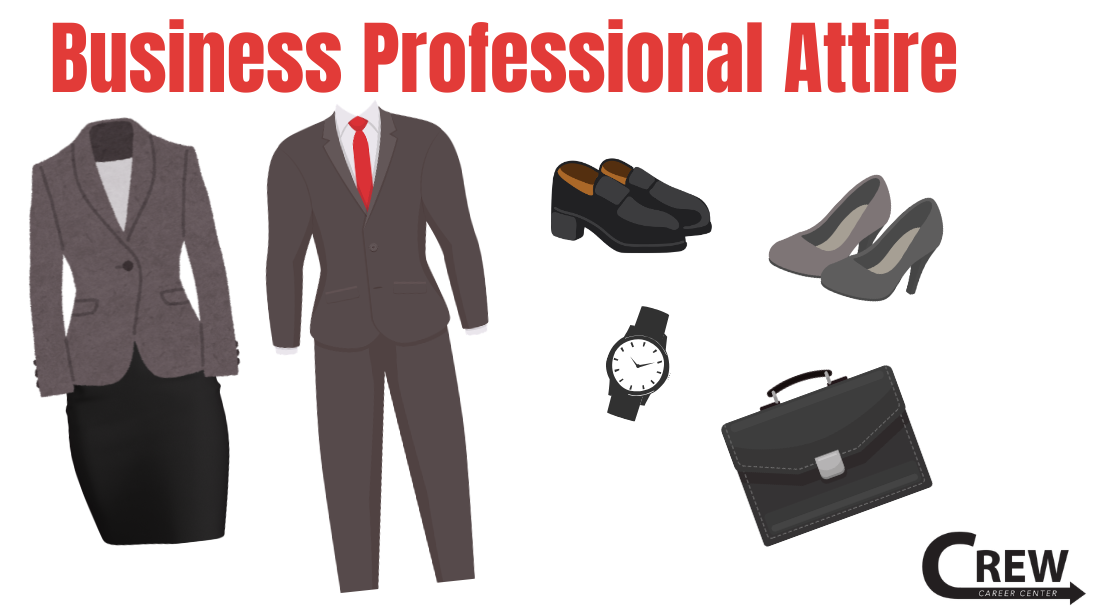
Business professional attire is best for interviews and career fairs. This attire is commonly required for positions in government, banking, law, and corporate business.
- Structured, tailored pieces, such as a matching suit or a coordinated jacket with dress slacks or a skirt.
- Collared or polished tops, such as a button-up shirt or high-neck blouse in solid or subtle patterns.
- Professional, closed-toe shoes, such as loafers, oxfords, flats, or heels
- Neutral or classic colors, such as black, navy, gray, tan, or other muted tones.
Business Casual Attire #section
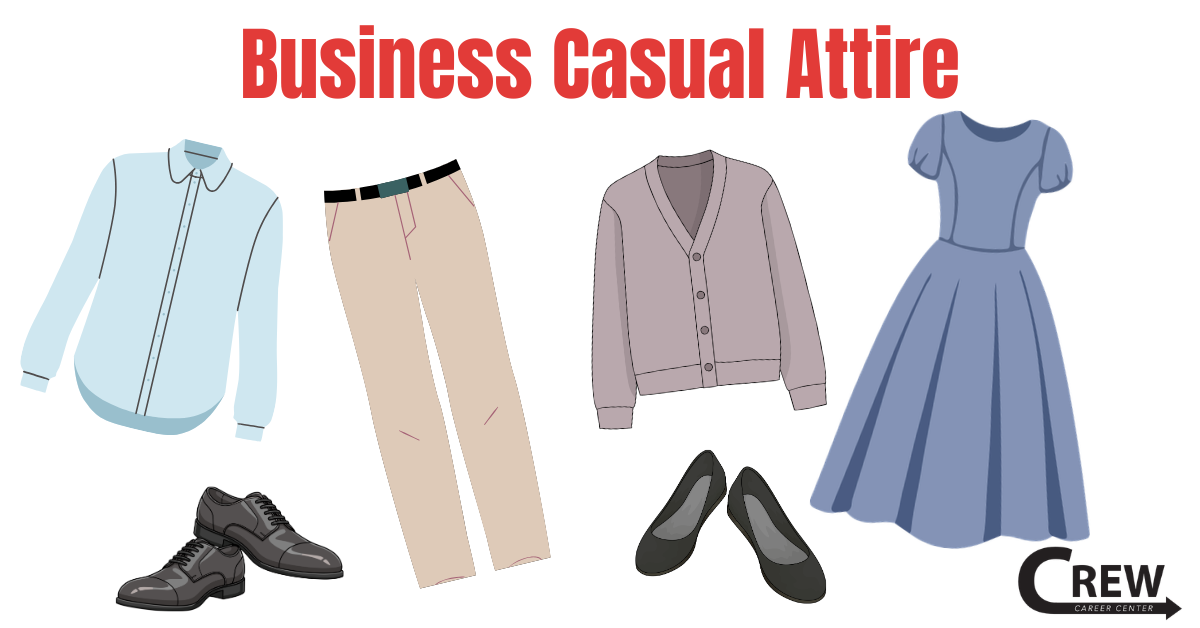
Business casual attire is professional but more relaxed than business professional. This attire may be appropriate for the office, conferences, or a networking event
- Professional separates, such as slacks, khakis, skirts, or dresses
- Collared or simple tops that are clean, modest, and well-fitted
- Less structured pieces, such as jackets and cardigans
- Professional, closed-toe shoes, such as loafers, oxfords, flats, or heels
- More flexibility with colors and patterns while still avoiding anything too casual or flashy